Should I Play Braid? The Game That Proved Indie Could Be Art
Jonathan Blow's time-bending puzzle platformer launched the indie revolution in 2008. Eighteen years later, the Anniversary Edition makes the case for revisiting one of gaming's most important experiments.
What It Is
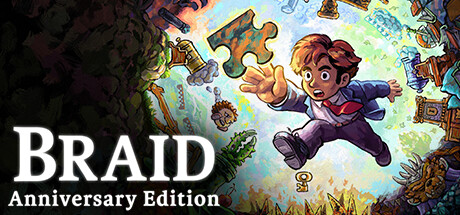
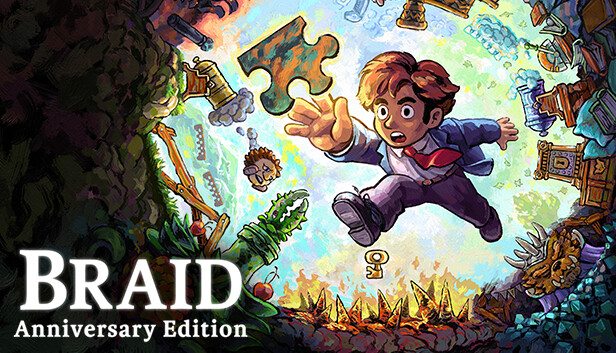
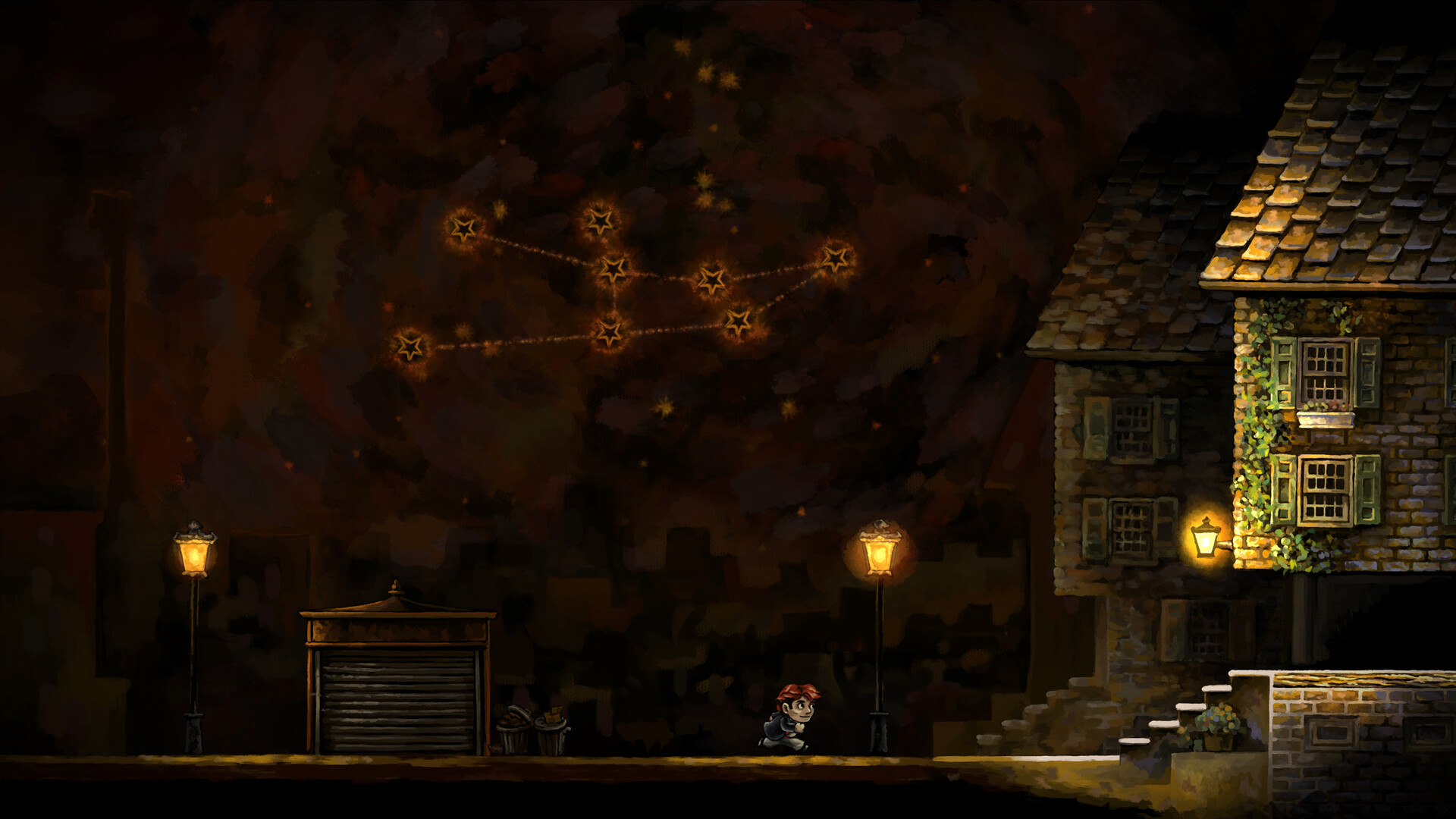
Braid is a puzzle platformer built entirely around time manipulation. You play as Tim, a man in a suit chasing a Princess through six worlds of increasingly mind-bending puzzles. Every world introduces a new rule for how time works. Rewind your mistakes. Watch objects ignore your rewinding. Create shadow copies of yourself. Tie the flow of time to your movement. Each mechanic starts simple and builds into puzzles that will genuinely make you feel smarter for solving them.
Jonathan Blow designed and self-funded the game over three years. Artist David Hellman painted every frame by hand. The original launched on Xbox 360 in August 2008 and on PC in April 2009. It was one of the first indie games to prove that a small team could create something that stood alongside, and in many ways surpassed, the output of major studios.
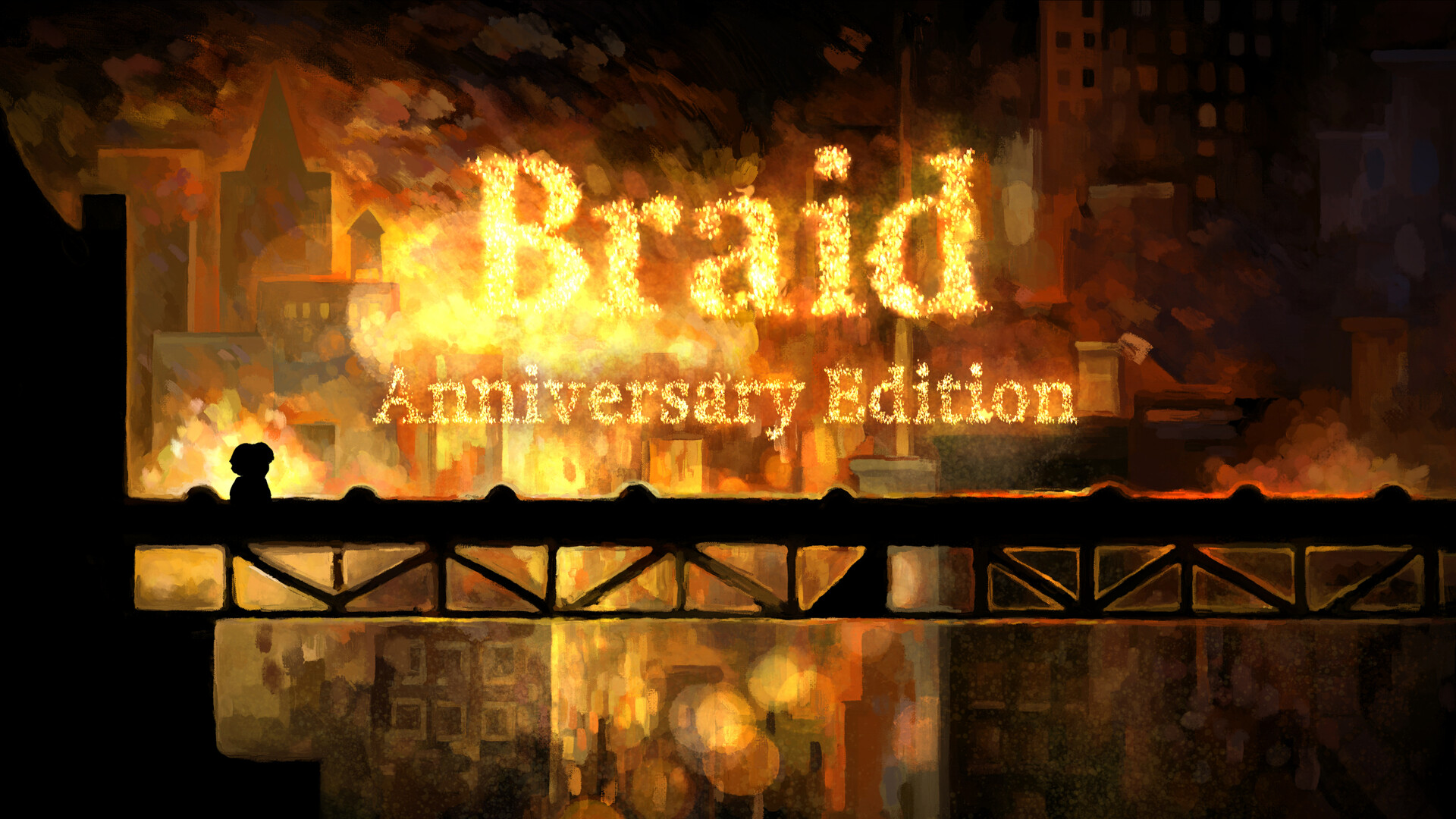
The Anniversary Edition released in May 2024. It features fully repainted artwork at modern resolutions, a new commentary world with 40 additional puzzles, and over 15 hours of developer commentary from Blow, Hellman, and the rest of the creative team. It is the definitive way to experience Braid today.
The original Braid scored 93 on Metacritic (Xbox 360) and 90 on PC. The Anniversary Edition holds a 94% positive rating on Steam and an 89 on OpenCritic, with 100% of critics recommending it. The game won multiple awards in 2008, including GameSpot’s Best Platformer and Official Xbox Magazine’s XBLA Game of the Year.
Why You Should Play It
Every world changes the rules. Most puzzle games have one core mechanic and iterate on it. Braid has six. World 2 lets you rewind time freely. World 3 introduces objects that are immune to your rewinding. World 4 creates a shadow of Tim that replays your actions. World 5 ties time to your horizontal movement. World 6 gives you a ring that warps time around it. And World 1, the final world, reverses everything you thought you understood. Each mechanic is introduced cleanly and escalates into puzzles that require genuine lateral thinking.
The puzzles respect your intelligence. There are no hint systems, no waypoints, no glowing outlines on interactive objects. The game trusts you to observe, experiment, and think. When you solve a puzzle in Braid, you solved it. Nobody held your hand. That feeling of breakthrough is rare in games, and Braid delivers it repeatedly. If you enjoy how Celeste teaches movement through level design rather than tutorials, Braid does the same thing for puzzle design.
The story rewards attention. The text passages between worlds seem straightforward at first. Tim is searching for a Princess. He made mistakes. He wants to fix them. Then you reach the final level, and the game recontextualizes everything. That ending is one of the most discussed moments in indie gaming history, and it works precisely because the narrative and the mechanics are inseparable. Saying more would spoil it.
The Anniversary Edition commentary is extraordinary. Over 15 hours of developer insight, delivered through an in-game system tied to specific puzzle elements. Jonathan Blow discusses his design philosophy, the meaning behind each world, and the years of iteration that went into the game. It is one of the most honest and detailed looks inside a creative process ever put into a game. For anyone interested in game design, this alone justifies the purchase.
Why You Might Not
Some puzzles demand real patience. Braid trusts you to figure things out on your own, and that means a few puzzles will stop you cold. Worlds 5 and 6 layer multiple time mechanics on top of each other, and the solutions sometimes require a leap of logic that only clicks after stepping away and coming back fresh. The game never holds your hand, which is part of its charm, but it also means you should be comfortable sitting with a problem for a while before the answer reveals itself.
It is a concentrated experience. A first playthrough takes roughly five to six hours. Experienced players can finish it in under three. The Anniversary Edition extends that significantly with 40 new commentary puzzles and over 15 hours of developer insight, but the core game itself is designed to be savored rather than sprawled across dozens of hours. Every puzzle earns its place. There is no filler. Whether that density feels like a strength or a limitation depends on what you value in a game.
My Take
Braid is the game that made me take indie games seriously.
I discovered Braid through Indie Game: The Movie. Watching Jonathan Blow talk about pouring years of his life and his own savings into a puzzle platformer, obsessing over every mechanic until it said exactly what he wanted it to say, genuinely moved me. That documentary made me realize indie games were not just smaller versions of big studio titles. They were personal statements. Braid was the proof.
What Blow and Hellman built is a game where form and content are the same thing. The time mechanics are not gimmicks layered on top of a platformer. They are the argument the game is making. Every puzzle is a statement about regret, about the desire to undo your mistakes, about the fundamental impossibility of going back. The final level does not just surprise you with a twist. It makes you feel the twist in your hands as the controls invert everything you have been doing.
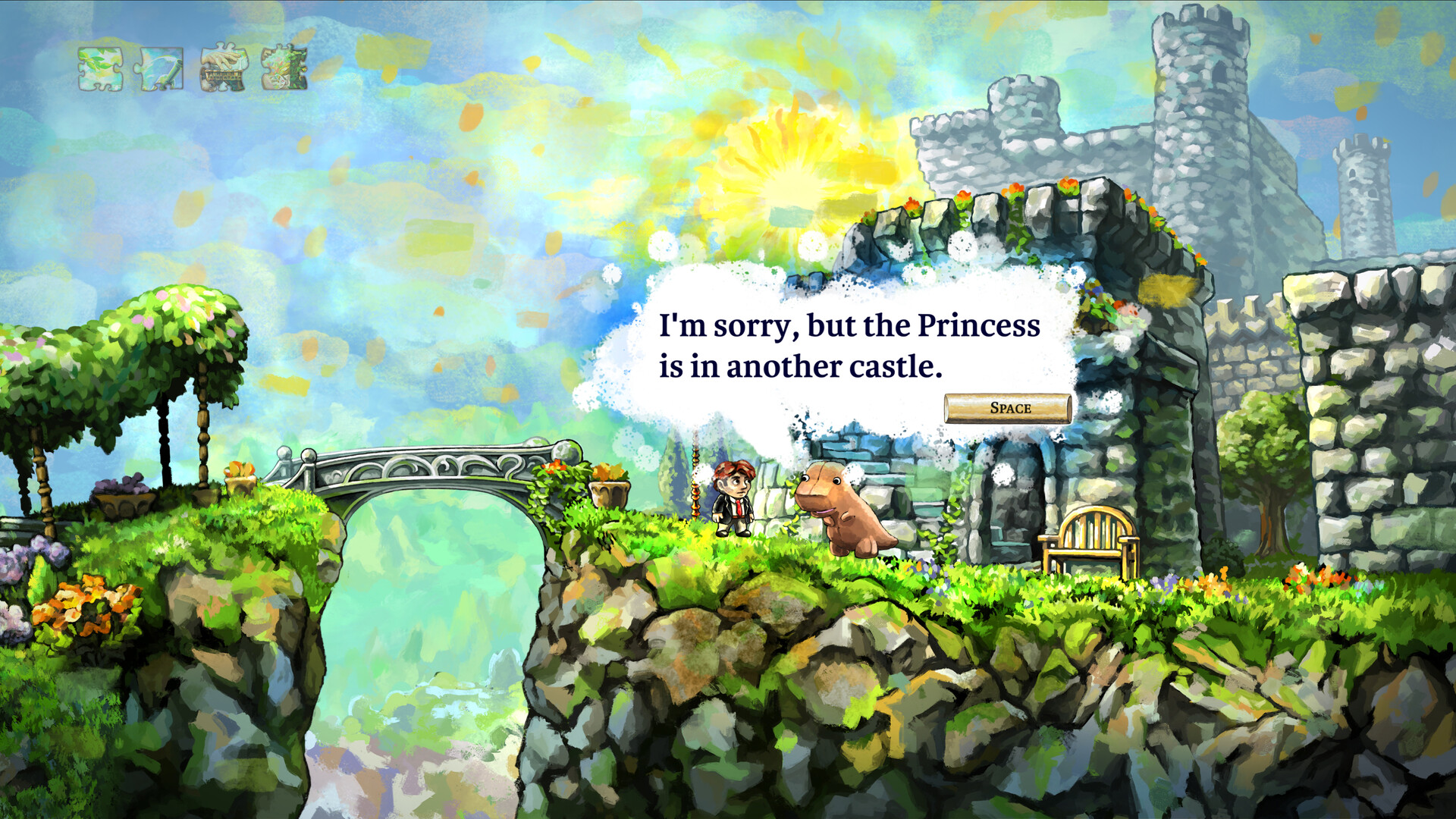
The Anniversary Edition is the version to buy. Hellman repainted every asset for modern displays, and the difference is striking. The original art was beautiful. The new art is breathtaking. The commentary system turns a five-hour game into a thirty-hour education in game design. Blow is candid about what worked, what almost didn’t, and why certain puzzles took years to design. It is the best developer commentary I have ever experienced in any medium.
Braid’s legacy is everywhere. You can draw a direct line from this game to the entire indie boom that followed. Super Meat Boy proved indie games could be commercially massive. Celeste proved they could be emotionally devastating. But Braid was the first to prove they could be important. In 2026, with the Anniversary Edition, it still is.

Written by
Stive Godin
Web dev by profession, gamer by passion. Always chasing the next great game and the next personal best in the gym. Building websites, playing games, and lifting heavy things.