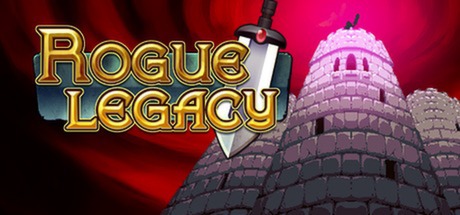
Should I Play Rogue Legacy? The Game That Made Dying a Family Business
Cellar Door Games turned permadeath into a family tree in 2013, and the result helped define an entire genre. Thirteen years later, Rogue Legacy's generational loop still hooks you for one more heir.
What It Is
Rogue Legacy is a roguelite action platformer where death is not the end. It is the beginning of a family dynasty. Every time you die, you pick one of three randomly generated heirs to continue the fight. Each heir has their own class, spell, and genetic traits. One might be a colorblind barbarian. Another might be a giant mage with ADHD who moves 30% faster. A third could be a dwarf assassin who can squeeze through passages nobody else can reach.
The castle itself reshuffles every run. Four zones filled with enemies, traps, and bosses. The gold you collect carries over between deaths, letting you upgrade your family manor with permanent stat boosts, new classes, and equipment. The catch: Charon, the gatekeeper, takes all your unspent gold before each run. Spend it or lose it.
Brothers Kenny and Teddy Lee of Cellar Door Games built Rogue Legacy over 18 months in Toronto. Kenny handled all the programming. Teddy designed the gameplay and story. Artist Glauber Kotaki and audio designer Gordon McGladdery rounded out the small team. The game launched on June 27, 2013, and it cost roughly $15,000 of their own money to develop. They earned it back within an hour of release.
Rogue Legacy holds an 85 on Metacritic and a 93% Very Positive rating from over 18,500 Steam reviews. It has sold roughly 1.7 million copies on Steam alone and is available on PC, Mac, Linux, PlayStation 3, PlayStation 4, PS Vita, Xbox One, and Nintendo Switch.
Why You Should Play It
The heir system turns every death into a decision. Most roguelites restart you from zero. Rogue Legacy gives you three heirs with randomized classes, spells, and traits. Choosing between them is genuinely strategic. A Shinobi with P.A.D. (spike traps do not activate) might be perfect for the area you are stuck on. A Lich who converts HP into MP could let you brute force a boss with spells. You learn to read your options and pick the heir that matches your current goal.
Traits add real variety. Rogue Legacy has over 30 genetic traits, and they are not just flavor text. Vertigo flips the entire screen upside down and mirrors it horizontally. Alzheimer’s removes the map entirely. Dextrocardia swaps your HP and MP pools. Near-sightedness blurs distant objects. Some traits are purely cosmetic, like Baldness. Others fundamentally change how you approach a run. The system ensures that no two heirs feel identical, even across hundreds of attempts.
The game does something clever with several traits that simulate real conditions. Color blindness turns the world grayscale. Gigantism makes your character 50% larger, filling doorways and making dodging harder. Dwarfism shrinks you down but opens up hidden passages. These are not just gimmicks. They meaningfully alter the spatial puzzle of navigating each room.
Progression feels earned. The manor upgrade tree is smartly designed. Early upgrades are cheap and impactful: more HP, more damage, access to new classes. Later upgrades demand more gold, pushing you deeper into the castle to afford them. The blacksmith crafts equipment from blueprints you find in the castle. The enchantress adds runes that grant abilities like dashing, double jumping, and vampirism. Every run funds the next one, and you always feel like you are getting somewhere.
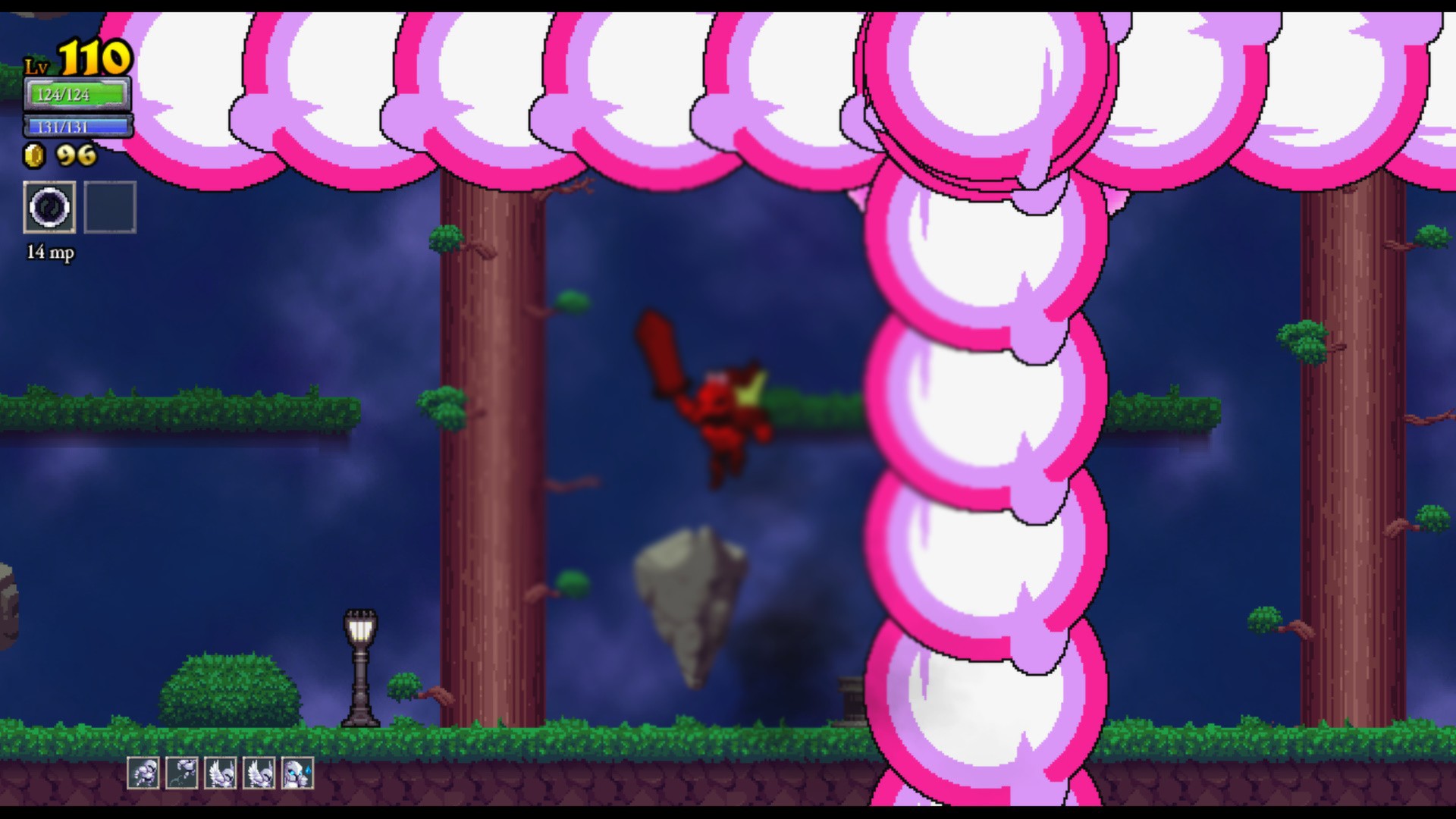
Ten classes keep combat fresh. Four starting classes (Knight, Mage, Barbarian, Knave) each upgrade into advanced versions (Paladin, Archmage, Barbarian King, Assassin). Four more unlock through the manor: Shinobi, Miner, Spellthief, and Lich. Then there are two special classes with radically different playstyles. The Dragon cannot swing a sword or jump but has infinite flight and regenerating MP. Every class rewards a different approach, and the random heir selection forces you out of your comfort zone.
Why You Might Not
The pixel art has aged. Rogue Legacy’s visuals were modest even in 2013. The environments cycle through four biomes with limited variety in tileset design. If you are coming from Celeste, Dead Cells, or Rogue Legacy 2’s hand-drawn art, the original can look plain by comparison. The gameplay carries it, but do not expect visual spectacle.
The difficulty curve is real. Early runs can feel punishing, especially before you have unlocked enough upgrades to survive more than a few rooms. The Charon mechanic, which strips all remaining gold before each run, means inefficient spending sets you back. The four bosses have patterns that take genuine practice to learn, and the later castle zones ramp up enemy density and damage significantly. If you prefer games that ease you in gently, the first few hours of Rogue Legacy will test your patience.
Some traits are more frustrating than fun. Vertigo (screen flipped upside down) and Alzheimer’s (no map) sound amusing in theory but can make a run genuinely unpleasant. You can always pick a different heir to avoid them, but sometimes all three options carry punishing traits. It is part of the randomness, and some players find it charming. Others find it exhausting.
My Take
Rogue Legacy was one of the first games that made me understand what “one more run” actually meant.
Most roguelikes before it treated death as a hard reset. You died, you lost everything, you started over. Rogue Legacy rejected that premise entirely. It let you keep something tangible after every failure. Not just knowledge of enemy patterns, but actual permanent upgrades. Gold spent on the manor carried forward. New equipment persisted. Rune abilities stacked. The castle still killed you constantly, but every death funded progress. That single design choice turned permadeath from a punishment into a loop you wanted to repeat.
The heir system is what keeps you playing. You die, and instead of frustration, you get curiosity. What traits will my children have? Is that a Hokage with O.C.D. who regenerates MP by smashing objects? That could work. A Spelunker with Gigantism and Dyslexia? Probably not ideal, but it sounds hilarious. The randomness creates stories. I still remember the dwarf Paladin who somehow cleared a boss I had been stuck on for an hour, because her tiny hitbox dodged attacks that should have killed her.

What impresses me most in hindsight is how much Cellar Door Games got right on the first try. Two brothers with a $15,000 budget built a game that defined how an entire genre handles progression. Before Rogue Legacy, most roguelikes treated death as a hard reset. After Rogue Legacy, permanent upgrades between runs became standard. You can draw a line from this game straight to Dead Cells, Hades, and dozens of other roguelites that use the same “die, upgrade, try again” loop. It did not invent the idea, but it popularized it so effectively that the genre shifted.
The sequel, Rogue Legacy 2, is mechanically superior in almost every way. Better art, more classes, deeper trait interactions, tighter combat. But the original still has something the sequel cannot replicate: simplicity. Ten classes instead of fifteen. Thirty traits instead of hundreds. Four zones instead of six. It is a tighter game because it has less, and sometimes that focus makes for a better experience. If you want the distilled version of the roguelite formula, this is it.
At $14.99, and frequently on sale for under $2, Rogue Legacy is one of the best value propositions in indie gaming. It is the kind of game where you sit down for thirty minutes and look up three hours later. If you have played Crypt of the NecroDancer, Cult of the Lamb, or any of the best roguelikes on Steam and wondered where this whole thing started, Rogue Legacy is one of the answers.


Written by
Stive Godin
Web dev by profession, gamer by passion. Always chasing the next great game and the next personal best in the gym. Building websites, playing games, and lifting heavy things.