Unreal Engine for Indie Developers in 2026: The Complete Guide
Unreal Engine powers 31% of all Steam revenue. A solo developer used it to sell 2.5 million copies. Here is everything indie developers need to know about using Unreal in 2026, from licensing to hardware to the features that actually matter.
Unreal Engine has an image problem. Mention it to indie developers and the first reaction is usually the same: “That is for AAA studios.” Fortnite. Final Fantasy VII Remake. The engine behind billion dollar productions.
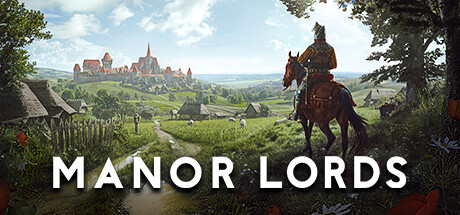
Then you look at the numbers. A solo developer named Grzegorz Styczeń built Manor Lords in Unreal Engine and sold 2.5 million copies. Clair Obscur: Expedition 33, made by a 33 person team, sold 5 million copies in its first six months. In 2024, Unreal Engine games generated 31% of all Steam revenue, surpassing Unity for the first time since 2018. The indie perception does not match the indie reality.
This article is not a comparison guide. If you want a side by side breakdown of Godot, Unity, and Unreal, read our engine comparison. If you want a deep dive into Unity specifically, we wrote that too: Unity in 2026. This is the Unreal deep dive. What the engine offers in 2026, what it costs, and whether it makes sense for your project.
The Perception Problem
Unreal Engine was built for shooters. That is literally how it started. The original Unreal in 1998. Then Gears of War. Then Fortnite. The engine’s DNA is AAA, and its reputation followed.
For years, that reputation was justified. Unreal was overkill for small teams. The editor was massive, the learning curve was steep, and you needed serious hardware just to open a project. Godot and Unity were lighter, faster to learn, and more practical for a two person studio making a 2D platformer.
What changed is not one thing. It is a combination. Blueprints matured into a legitimate visual scripting system that can ship real games without writing C++. The Procedural Content Generation framework graduated to production-ready status, letting small teams generate large worlds without hand-placing every asset. Fab replaced the old marketplace with 420,000+ assets, many of them free. Epic MegaGrants funded over 3,000 indie projects. And Epic Games Store’s economics made Unreal the cheapest engine to publish on if you play the system right.
The result: 28% of all games released on Steam in 2024 were built with Unreal Engine. That is not an AAA-only engine. That is an engine where indies are shipping.
What You Get in UE 5.7
Unreal Engine 5.7 shipped in November 2025 and is the current stable release. Here is what matters for indie developers.
Nanite is Unreal’s virtualized geometry system. Import film-quality 3D assets directly into your project. No LODs. No manual optimization of mesh complexity. Nanite handles it at runtime. For a small team without a dedicated technical artist, this eliminates weeks of tedious optimization work.
Lumen provides real-time global illumination. Dynamic lighting that bounces off surfaces, fills rooms naturally, and responds to changes in real time. No light baking. No waiting 45 minutes for a lightmap build every time you move a wall. For indie developers iterating fast on level design, this is transformative.
PCG framework (Procedural Content Generation) is now production-ready in 5.7. This is arguably the biggest indie win in the entire release. The new PCG Editor Mode lets you draw splines, paint points, and create volumes that connect to PCG Graphs. Populate an entire forest, scatter buildings across a landscape, or generate dungeon layouts. All without code. All adjustable in real time.
MegaLights graduated to beta. Hundreds of dynamic lights in a scene without manual optimization. Place lights where they make sense artistically instead of budgeting them like a scarce resource.
Nanite Foliage is experimental but already usable. Dense vegetation (tree canopies, pine needles, ground cover) rendered without LODs or pop-in. Combined with the new Procedural Vegetation Editor and free Quixel Megaplants assets, a small team can build lush environments that would have required a dedicated environment art team two years ago.
Substrate (production-ready) is the new modular material system. Layer and combine material behaviors with physical accuracy. Build complex surfaces without writing shader code.
MetaHuman authoring is now fully in-engine as of UE 5.6. Create realistic human characters directly in the editor without round-tripping to external tools. For games that need believable characters without a character art team, this closes a gap that used to cost tens of thousands of dollars in outsourcing.
The Money: Licensing and Royalties
Unreal Engine’s licensing model is simple at the surface and surprisingly generous when you dig into the details.
The baseline: Unreal Engine is free to use until your game earns $1 million in lifetime gross revenue. After that first million, you pay a 5% royalty on gross revenue above the threshold. The $1 million is per product, lifetime. Not annual.
The EGS advantage: If you launch your game on the Epic Games Store at the same time as other PC stores (or before), the royalty drops to 3.5% instead of 5%. Revenue earned directly through EGS is completely royalty-free. Zero percent. Combined with EGS’s 88/12 revenue split, Unreal developers on EGS keep 88% of their revenue with no engine royalty on top.
The first million on EGS: Epic announced in May 2025 that it waives the 12% store cut on the first $1 million in revenue per app annually on the Epic Games Store. For a Unreal Engine developer publishing on EGS, this means you keep 100% of your first million dollars. No store cut. No engine royalty.
A worked example: Your game earns $500,000 on Steam and $200,000 on the Epic Games Store in its first year. Total gross: $700,000. Since you are under $1M lifetime, you owe Epic zero in royalties. Steam takes its 30% ($150,000). EGS takes 0% on the first $1M ($0). You keep $550,000. If the same game earned $1.5M total ($1M Steam, $500K EGS), you would owe 3.5% royalty on the $500K above $1M earned on Steam ($17,500), and nothing on EGS revenue. Total engine cost: $17,500 on $1.5M in revenue.
For comparison: Godot is completely free with zero royalties, forever. Unity Personal is free under $200K annual revenue, then $2,200 per seat per year with no royalties. For the full Unity pricing breakdown, read our Unity in 2026 deep dive.
Games Shipping on Unreal by Indie Teams
The proof is in the games. These are real indie and small team projects that shipped on Unreal Engine with real numbers.
Manor Lords is the poster child. Grzegorz Styczeń started building a medieval city builder as a solo hobby project in Unreal Engine 4. After receiving an Epic MegaGrant in 2021, he was able to quit his day job and hire freelance contractors. The game migrated from UE4 to UE5 and launched in April 2024 to immediate success: 1 million copies in the first 24 hours, 2.5 million total. Styczeń still calls himself a solo dev because “if I quit, it is game over.” The full credits list over 400 people when you include outsourced animation, QA, and localization.
Clair Obscur: Expedition 33 by Sandfall Interactive proved that a 33 person core team could make an AAA-looking turn-based RPG with Unreal Engine 5. Released in April 2025, it sold 500,000 copies in 24 hours, 1 million in three days, and crossed 5 million total by October. Hideo Kojima called their team size “ideal.” We covered their indie award sweep before launch.
Stray by BlueTwelve Studio made you play as a cat in a cyberpunk city. Small team, Unreal Engine 4, approximately 4 million copies on Steam alone. The art direction proved that UE4 could produce stylized, intimate experiences, not just sprawling open worlds.
Kena: Bridge of Spirits by Ember Lab, a small animation studio turned game developer, shipped their first game on UE4 to over 600,000 Steam copies. The visual quality competed with games from studios ten times their size.
Palworld by Pocketpair used UE4 to build an open-world survival game with creature collection. The studio switched from Unity because Unreal was “more suitable for heavier open-world games.” Result: 15 million copies on Steam alone, 32 million total players across platforms.
Reanimal by Tarsier Studios (the creators of Little Nightmares) launched in February 2026 on UE5. A co-op horror adventure with jaw-dropping visual fidelity that competes with animated films. Available on PC, PS5, Xbox, and Nintendo Switch 2.
Black Myth: Wukong pushes the definition of indie with its ~140 person team and estimated $70 million budget. But it shipped on UE5, sold 20 million units in its first month, and generated over $1 billion on Steam. It demonstrates the upper ceiling of what a moderately sized team can achieve with the engine.
The Fab Marketplace
Fab is Unreal’s unified asset marketplace, launched in 2024 by merging the old Unreal Marketplace with ArtStation Marketplace and Sketchfab. The numbers are staggering: 420,000+ live listings from 20,000+ publishers, tripling in size in its first year. Creators earned $24 million through Fab in 2025.
For indie developers, Fab is a force multiplier. Over 1,500 Quixel Megascans assets are permanently free: photogrammetry scans, materials, decals, and entire scene-ready packs. Epic releases free asset drops monthly, including lighting packs, environment kits, and the new Quixel Megaplants collection designed for UE 5.7’s Procedural Vegetation Editor.
The practical impact: a solo developer or small team can populate a visually rich world using professional-grade assets without an art budget. Combined with PCG for procedural placement, a single person can build environments that would have required a full environment art team three years ago.
MegaGrants: Free Money for Indie Devs
Epic MegaGrants have distributed over $42 million across 3,000+ projects since the program launched in 2019. Grants range from $5,000 to $150,000 and cover indie games, open-source tools, and UEFN experiences.
Manor Lords is the program’s most visible success story. The MegaGrant let Styczeń transition from hobby developer to full-time, enabling the project that went on to sell millions. The grant funded contractors and infrastructure that a solo developer could not afford otherwise.
The program now uses a cycle-based submission process with two windows per year. Cycle 1 for 2026 is open until March 20. Cycle 2 runs from June 29 to September 4. The review period for Cycle 1 is March 21 through June 14.
If you are building an Unreal Engine game and need funding to bridge the gap between prototype and production, MegaGrants is one of the most accessible grant programs in the industry. No strings attached beyond using Unreal Engine.
The Hard Parts
Unreal Engine is powerful. It is also demanding. Here are the honest challenges.
Hardware requirements. The recommended development machine needs 32 GB RAM, an 8+ core CPU, and a modern GPU with at least 8 GB VRAM (RTX 4070 or equivalent). You can technically run the editor on less, but you will spend significant time waiting for shaders to compile and the editor to respond. If your development budget is tight, the hardware cost is a real consideration. A capable UE5 development machine costs $1,500 to $2,500 in 2026.
Build sizes. An empty Unreal Engine 5 project ships at approximately 321 MB. That number grows quickly with content. Mitigations exist: use the Shipping build configuration (not Development, which adds 300+ MB of debug overhead), disable unused plugins, blacklist unnecessary content. A disciplined team can reduce package size by 50% or more, but it requires attention from day one.
C++ vs Blueprints. Blueprints are powerful enough to ship entire games. Many successful indie titles use Blueprints exclusively. But performance-critical systems (AI pathfinding on thousands of agents, complex physics simulations, networking code) benefit significantly from C++. The recommended approach: prototype everything in Blueprints, then move performance-critical logic to C++ once you have proven the design works. Learning C++ from scratch while also learning Unreal is a steep hill. Budget 4 to 6 months minimum to become comfortable.
Nanite and Lumen require modern hardware. These features are designed for GPUs with 8+ GB VRAM. If you are targeting low-end hardware or older machines, you will need to disable them and fall back to traditional rendering. This works, but it removes much of UE5’s visual advantage. Know your target platform before committing.
The over-scoping trap. The creative director of Clair Obscur: Expedition 33 publicly warned that “using Unreal Engine 5 can be a trap” because the engine’s capabilities tempt teams to build beyond their capacity. When your tool can render photorealistic open worlds, it is easy to convince yourself that your three person team should build one. Scope discipline is harder with Unreal than with simpler engines, and it is the most common reason indie UE5 projects fail.
Should You Use Unreal in 2026?
Use Unreal when:
- Visual fidelity is a core selling point. If your game needs to look stunning in 3D, Unreal’s rendering pipeline (Nanite, Lumen, MegaLights) gives you the highest visual ceiling available.
- You are building an open world or large-scale environment. PCG, Nanite Foliage, and World Partition make large worlds feasible for small teams.
- You have console ambitions. Unreal exports natively to PlayStation, Xbox, and Nintendo Switch. Godot requires third party porting services that cost $10,000 to $50,000 or more.
- You plan to earn over $200K. Below $200K, Unity Personal is also free. But Unreal’s royalty model becomes more favorable at higher revenue levels, especially combined with EGS publishing.
- Your team has some C++ experience. Even basic C++ knowledge unlocks significant performance headroom.
Consider alternatives when:
- You are making a 2D game. Unreal’s 2D tooling is underdeveloped compared to Godot or Unity. Building a 2D game in Unreal is possible but painful.
- This is your first game. If you have never shipped a project, Unreal’s complexity will slow you down. Start with Godot. Ship something. Come back to Unreal later. We wrote a beginner’s guide that covers the fundamentals.
- You are targeting low-end hardware. If your audience plays on integrated graphics or older machines, Unreal’s modern rendering features become liabilities instead of assets.
- You have zero C++ experience and a complex game. You can ship simple to medium complexity games entirely in Blueprints. But if your design requires heavy simulation, networking, or AI systems, you will eventually need C++.
For a side by side comparison with concrete decision criteria, read our engine comparison guide.
Where to Start
If you are ready to try Unreal Engine, here are the practical starting points:
- Download: Unreal Engine 5.7 is available free at unrealengine.com. The install is 50+ GB, so plan accordingly.
- Official learning: Epic’s documentation and video tutorials are extensive. The “Your First Hour in Unreal Engine 5” series covers project setup, navigation, and basic workflow.
- Fab marketplace: Browse free assets at fab.com. Start with Quixel Megascans for photogrammetry materials and the Megaplants collection for vegetation.
- MegaGrants: Applications for Cycle 1 are open until March 20, 2026. If you have a prototype or solid pitch, apply.
- Community: The Unreal Engine forums, the r/unrealengine subreddit, and multiple Discord servers provide active support.
- Events: GDC 2026 (March 9 to 13) features four confirmed Unreal Engine sessions. Unreal Fest Chicago (June 16 to 18) is Epic’s flagship community event.
If you want to understand how to market the game you build, our indie marketing guide covers wishlist targets, budget breakdowns, and a 12 month timeline with real numbers.
Unreal Engine in 2026 is not the engine it was five years ago. It is still complex. It still demands serious hardware. But the tools, the economics, and the ecosystem have shifted. A solo developer built a 2.5 million copy hit with it. A 33 person team made a game that Hideo Kojima held up as the ideal. The engine is ready for indies. The question is whether your project is ready for the engine.

Written by
Stive Godin
Web dev by profession, gamer by passion. Always chasing the next great game and the next personal best in the gym. Building websites, playing games, and lifting heavy things.