The 5 Pillars of Immersion: How to Make Your Indie Game World Feel Real
Your game's world doesn't need AAA budgets to feel real. It needs consistency. Here are the five pillars that make players forget they're playing a game.

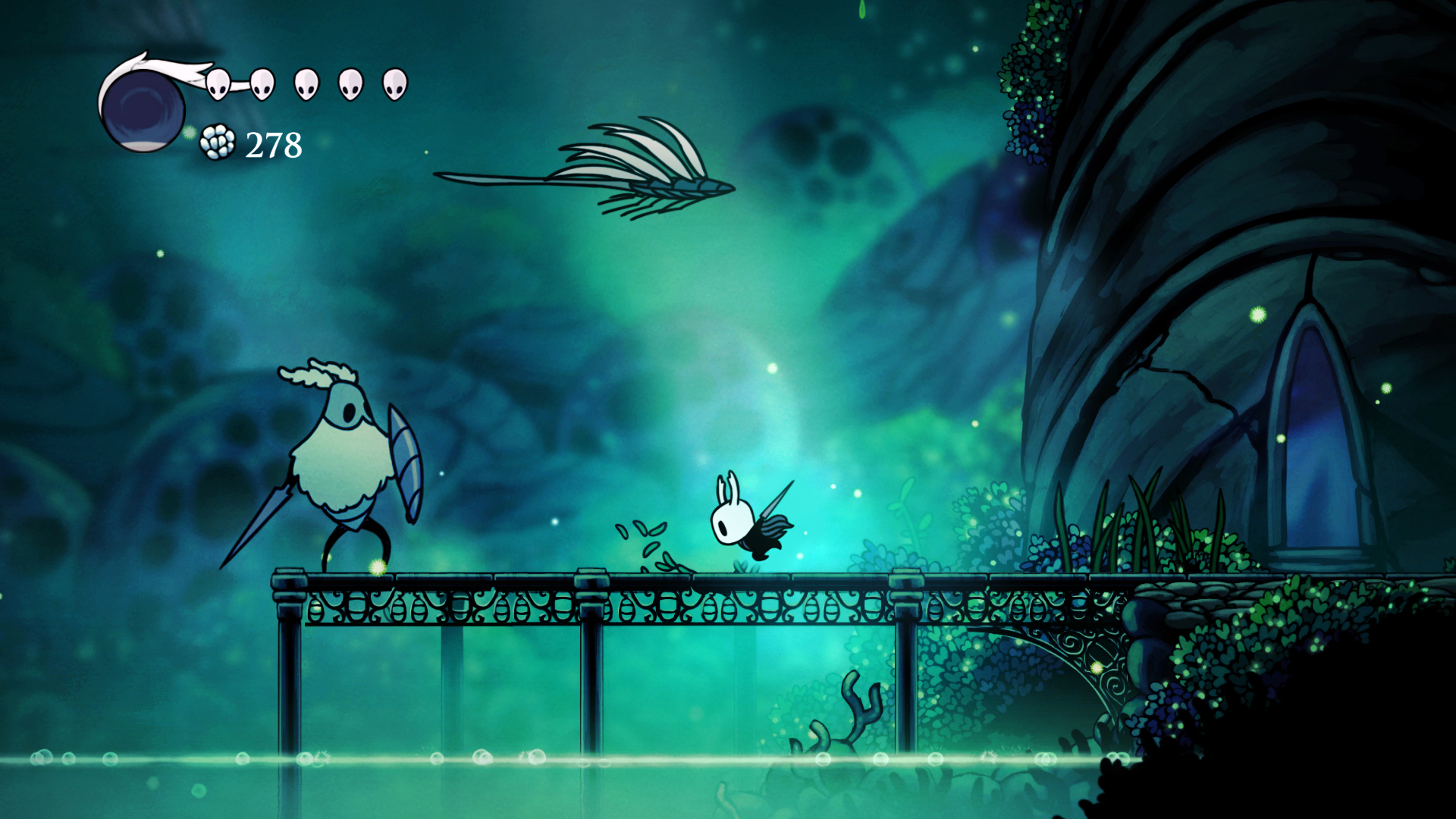
The first time you descend into Greenpath in Hollow Knight, something clicks. The color palette shifts from cold gray to deep emerald. The music softens into harp and woodwind. Acid pools glow beneath mossy platforms. Every element agrees: you are somewhere ancient, overgrown, and alive.
Or consider the first time you realize Outer Wilds’ sun is going to explode. Not in a cutscene. Not in a text box. You look up and watch it happen. Then you wake up at your campfire, twenty two minutes earlier, and the loop begins again. The world told you its rules without saying a word.
These moments work because every part of the game reinforces every other part. Art, sound, UI, mechanics, and environment all tell the same story. When they agree, players stop thinking about the game and start living in it. That agreement is suspension of disbelief, and it does not require a massive budget. It requires consistency. Here are five pillars that make it happen, with practical takeaways you can apply today.
1. Visual Consistency
Every visual element in your game must look like it belongs in the same world. Character designs, backgrounds, UI elements, color palettes, and particle effects should share a common language.
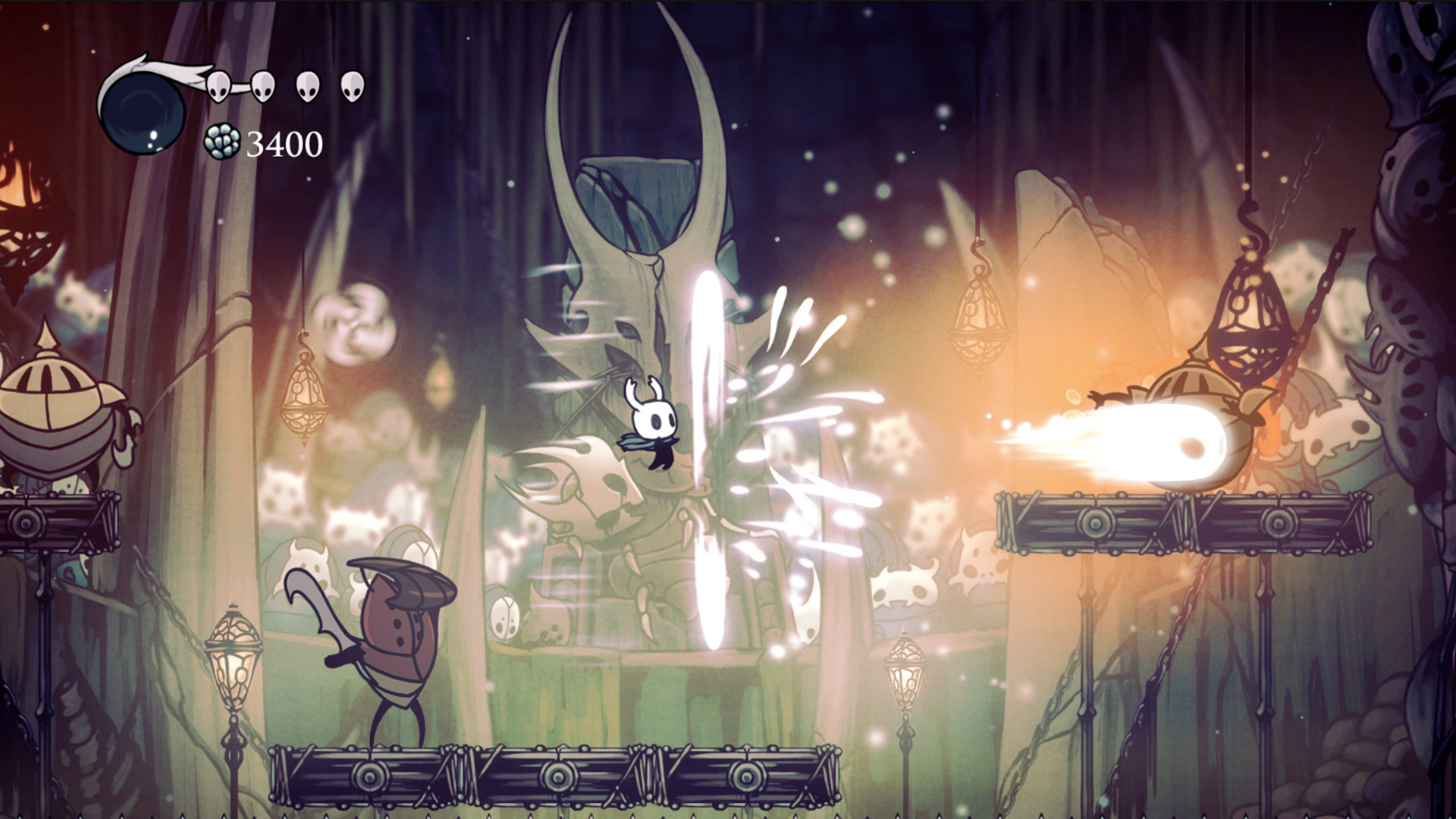
Hollow Knight is a masterclass in visual coherence. Team Cherry’s artist Ari Gibson hand-drew every frame in Adobe Photoshop, exported as PNGs, and imported them into Unity. This frame-by-frame process gives the entire game a unified hand-illustrated quality. Each biome in Hallownest has a distinct color palette. Greenpath uses deep greens and teals. Crystal Peak uses whites and pale blues. The Hive uses warm amber. But despite these shifts, every area still feels like part of the same underground kingdom because the character silhouettes share consistent proportions, the line weight stays uniform, and even the map icons match the hand-drawn aesthetic.
Outer Wilds takes a different approach that is equally effective. The handmade, almost toylike appearance of the planets contrasts deliberately with the angular, precise architecture of the ancient Nomai. This contrast works because it follows a rule: everything built by the Hearthians looks rustic and improvised, everything built by the Nomai looks geometric and calculated. Deliberate contrast is not inconsistency. It is a visual rule applied consistently.
Key principles:
- Pick one art production method and stick with it. If you illustrate characters in Procreate, do not model environments in Blender unless you have a strong unifying shader.
- Define your palette per biome, but share accent colors across the game. Players should always know they are in the same world.
- Test silhouettes. If you cannot identify every character and enemy in pure black silhouette, your visual language is too muddled.
2. Sound and Music
Sound reinforces where you are and what the world is. A well-designed soundtrack does not just set a mood. It becomes part of the world’s geography.
Outer Wilds has one of the most elegant audio systems in any indie game. Each of the Travelers you encounter on different planets plays a unique instrument. Esker plays drums on the Attlerock. Riebeck plays banjo on Brittle Hollow. Feldspar plays harmonica from inside Dark Bramble. You can hear their performance when you are physically nearby, but the real magic is the signalscope. This in-game tool lets you detect each Traveler’s instrument signal from anywhere in the solar system. Point the signalscope at a distant planet, pick up a faint banjo signal, and you know Riebeck is there. Sound becomes a literal navigation tool.
The genius of this system is that the audio IS the world. The music is not a soundtrack playing over the game. It is a diegetic performance happening inside it. When all the Travelers play together at the end, the emotional payoff works because you spent the entire game physically seeking out each instrument, one planet at a time.
For a deep dive into audio fundamentals, tools, and mixing techniques, check our game audio beginner guide. It covers everything from choosing the right file formats to setting up audio buses.
Key principles:
- Tie audio to place, not to player state. A room should sound like itself regardless of what the player is doing in it.
- Use silence as a tool. A quiet corridor before a boss arena builds tension. Complete silence after a loud event creates impact through contrast.
- Consider diegetic sound. Music that exists inside the world (a radio, a musician, a ritual) is more immersive than a disembodied soundtrack.
3. UI That Belongs
Every UI element should feel like it was designed by someone who lives in the game’s world. Diegetic UI (interface elements that exist inside the fiction) is powerful, but even non-diegetic UI can feel cohesive if it matches the game’s visual identity.
Hollow Knight’s map system is worldbuilding disguised as UI. You do not open a menu and see a clean overhead map. You buy maps from Cornifer, a humming cartographer you find in each new area. You must sit at a bench to update your map with the areas you have explored. The map itself looks hand-drawn in the game’s art style, with the same line weight and color palette as the world. Even the charm equipment screen uses organic, illustrated frames instead of generic rectangular boxes.
This system does triple duty. It is a progression mechanic (finding Cornifer). It is a risk/reward decision (exploring without a map). And it is an immersion device (the map looks like an artifact from Hallownest, not a game overlay). Every UI element reinforces the fiction.
Outer Wilds does something similar with its ship log. As you discover clues about the solar system’s mysteries, your ship log updates automatically. The entries are written in your character’s voice, with casual observations and question marks on things you have not figured out yet. It reads like a journal, not a quest tracker.
Key principles:
- Match UI art to game art. If your game uses pixel art, your menus should use pixel art. A sleek modern font in a medieval fantasy breaks the spell.
- Ask: “Who made this interface?” If no one in your world would build this UI, it does not belong.
- Diegetic UI is not mandatory. A health bar is fine. But make it look like it belongs. Bloodborne’s health bar uses the same gothic serif typeface as its item descriptions.
4. Mechanical Coherence
When your game’s rules match your world’s rules, players believe in both. When they contradict, players notice. That gap between what the story says and what the mechanics do has a name: ludonarrative dissonance. In plain terms, it is the feeling of “wait, that does not make sense” when your gameplay undermines your narrative.

Outer Wilds is the gold standard for mechanical coherence. The solar system runs on real physics simulation. Planets orbit the sun. Moons orbit planets. Gravity pulls you toward surfaces. You can land on a comet as it passes through the system. The 22 minute time loop is both a narrative device (the universe is ending) and a gameplay mechanic (you must gather knowledge across multiple loops). Story and systems agree completely. Nothing is faked for convenience.
This matters because the moment you catch a game faking its own rules, the illusion breaks. If Outer Wilds told you “the solar system is a living, breathing place” but the planets were on static rails, you would feel the lie. The physics simulation makes every orbit, every tidal change, and every volcanic eruption feel earned.
Rain World applies the same principle to a 2D ecosystem. Prey creatures eat plants. Predators hunt prey. Lizards patrol territories regardless of whether the player is nearby. The food chain exists independently of you. You are not the center of this world. You are surviving in it. That design choice makes Rain World feel more alive than games with ten times its budget.
For techniques that make individual mechanics feel satisfying on a moment-to-moment level, see our game feel and juice guide. This pillar is about the bigger picture: do your systems tell the same story as your world?
Key principles:
- If a mechanic contradicts your world, change the mechanic or change the world. Do not hope players will not notice. They will.
- Simulate where it matters. You do not need to simulate everything. But the systems your game draws attention to must be honest.
- Define ludonarrative dissonance simply for your team: “Would a player say ‘wait, that does not make sense’ after this interaction?” If yes, fix it.
5. Environmental Storytelling
The world should tell its own story through what the player sees, not through text dumps. Every placed object is a sentence. Every empty room is a paragraph.
Hollow Knight tells the story of Hallownest’s fall without a single expository cutscene. When you first enter the Forgotten Crossroads, the area is a functional hub with living bugs, passable paths, and a sense of faded grandeur. After certain events in the game, this same area transforms into the Infected Crossroads. The enemies change. The color palette shifts to sickly orange. Paths you remember become blocked by organic growths. You learn what happened to Hallownest not from a narrator but from walking through the ruins and noticing what changed.
This works because Team Cherry placed every asset with narrative intent. A dead bug slumped against a wall is not decoration. It tells you this corridor was dangerous before you arrived. A locked door with claw marks on it tells you something tried to get out. The player becomes an archaeologist, piecing together the story from physical evidence.
Hyper Light Drifter pushes this even further by removing text entirely. The entire narrative is told through environmental imagery and brief animated vignettes. You explore ruined civilizations and piece together what happened without reading a single word. Heart Machine trusted players to interpret the world visually, and the result is one of the most atmospheric indie games ever made.
For techniques on how environments can teach mechanics (as opposed to telling stories), check our level design guide. That article covers how rooms can communicate gameplay rules. This pillar is about how rooms communicate narrative and history.
Key principles:
- Show the aftermath, not the event. A destroyed village is more evocative than a cutscene of the destruction. Let players reconstruct the timeline.
- Reward observation. Hide story details in the background, in enemy placement, in the items left behind. Players who look closely should learn more than players who rush through.
- Change the world when the story demands it. If your narrative says something happened, the environment must reflect it. Hollow Knight’s Crossroads infection is powerful because you walked through those same halls when they were intact.
Quick Self-Audit
Rate your game on each pillar, one to five:
- Visual Consistency: Does every element look like it belongs in the same world?
- Sound: Does the audio reinforce where you are?
- UI: Does the interface feel like part of the world?
- Mechanics: Do your game rules match your world rules?
- Environment: Does the world tell a story without words?
If any pillar scores below 3, that is your next priority. You do not need to fix everything at once. Pick the weakest pillar and spend one day improving it. Consistency compounds. One strong pillar raises the baseline for all the others.
For more on the individual disciplines covered here, explore our audio guide, game feel guide, and level design guide. Each goes deeper into one pillar with tools, techniques, and more examples.
Now go audit one pillar. Your players will feel the difference before they can name it.

Written by
Stive Godin
Web dev by profession, gamer by passion. Always chasing the next great game and the next personal best in the gym. Building websites, playing games, and lifting heavy things.