How to Actually Finish Your Indie Game: A Scope Management Guide
Over 70% of indie games that exceed their original scope never ship. Here is how to scope your project, cut features without guilt, and actually release your game.
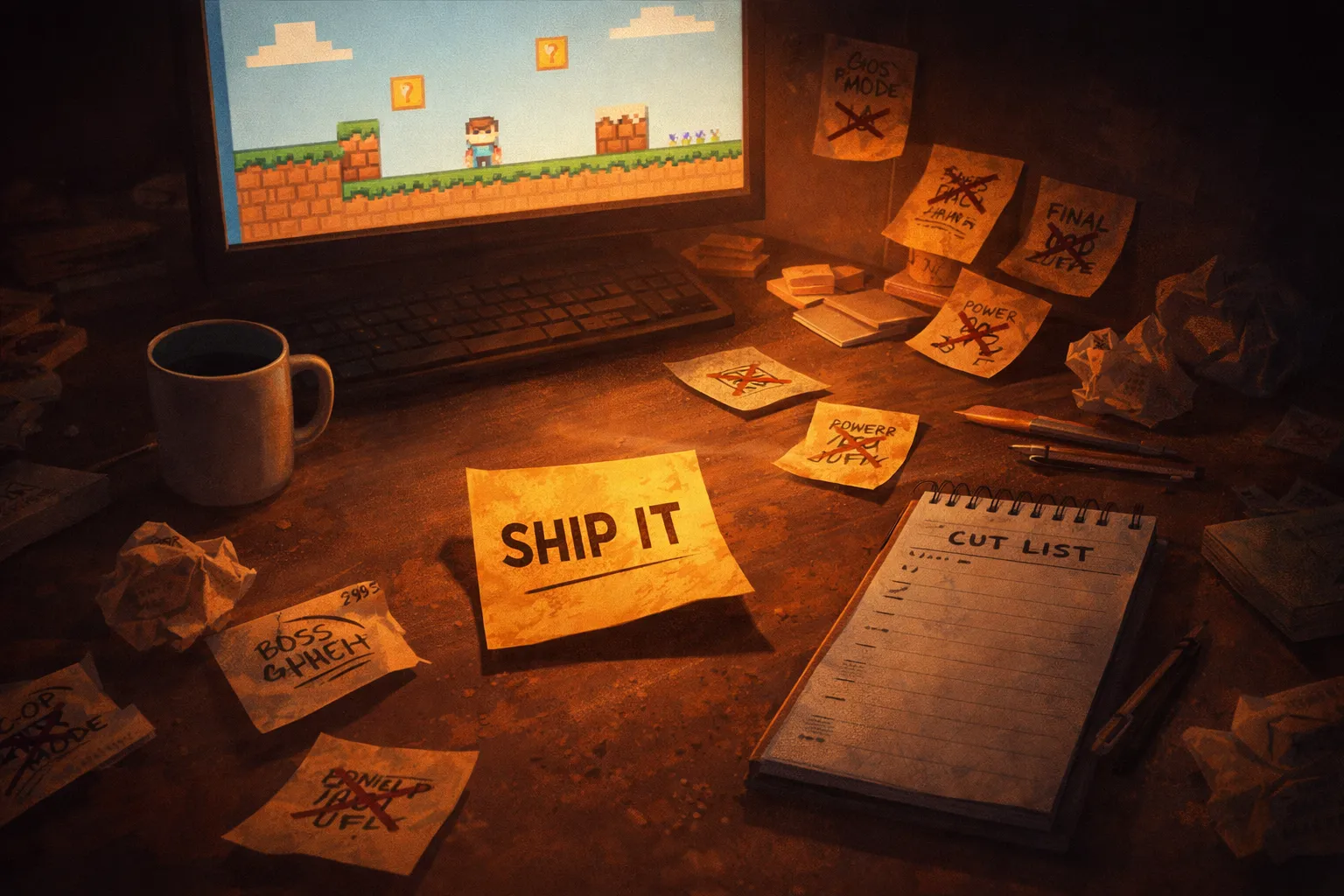
You have a game idea. It is the best idea you have ever had. A sprawling open world RPG with branching dialogue, a crafting system, procedural dungeons, multiplayer co-op, and a soundtrack composed by your friend who “knows a guy.” You open your engine of choice, create a new project, and start building.
Eighteen months later, you have a half-finished inventory system, a character controller that mostly works, and zero shipped games. Sound familiar?
You are not alone. Over 70% of indie developers who participated in industry surveys cited “scope too large” as a significant factor in their game failing to meet deadlines or being abandoned entirely. The number one reason indie games die is not bad art, bad code, or bad luck. It is building too much.
This guide is about the opposite. It is about building less, shipping more, and learning the discipline that separates released games from abandoned folders on your desktop.
Why Scope Creep Happens
Scope creep is not a planning failure. It is a psychological one. You add features because each one feels small in isolation. “Just one more biome.” “Just a basic dialogue system.” “Just a quick multiplayer prototype.” Each addition takes a week or two, which feels harmless. But ten of those stack up into five months of work you never planned for.
The deeper problem is that adding features feels like progress. Cutting features feels like failure. Your brain rewards the creative rush of a new idea and punishes the discipline of saying no. This is why scope creep is so hard to fight. It feels good right up until it kills your project.
Games That Shipped by Staying Small
The most successful indie games of the past decade share a common trait. They do one thing extremely well instead of doing ten things adequately.
Celeste: A Game Jam Prototype That Became a Masterpiece
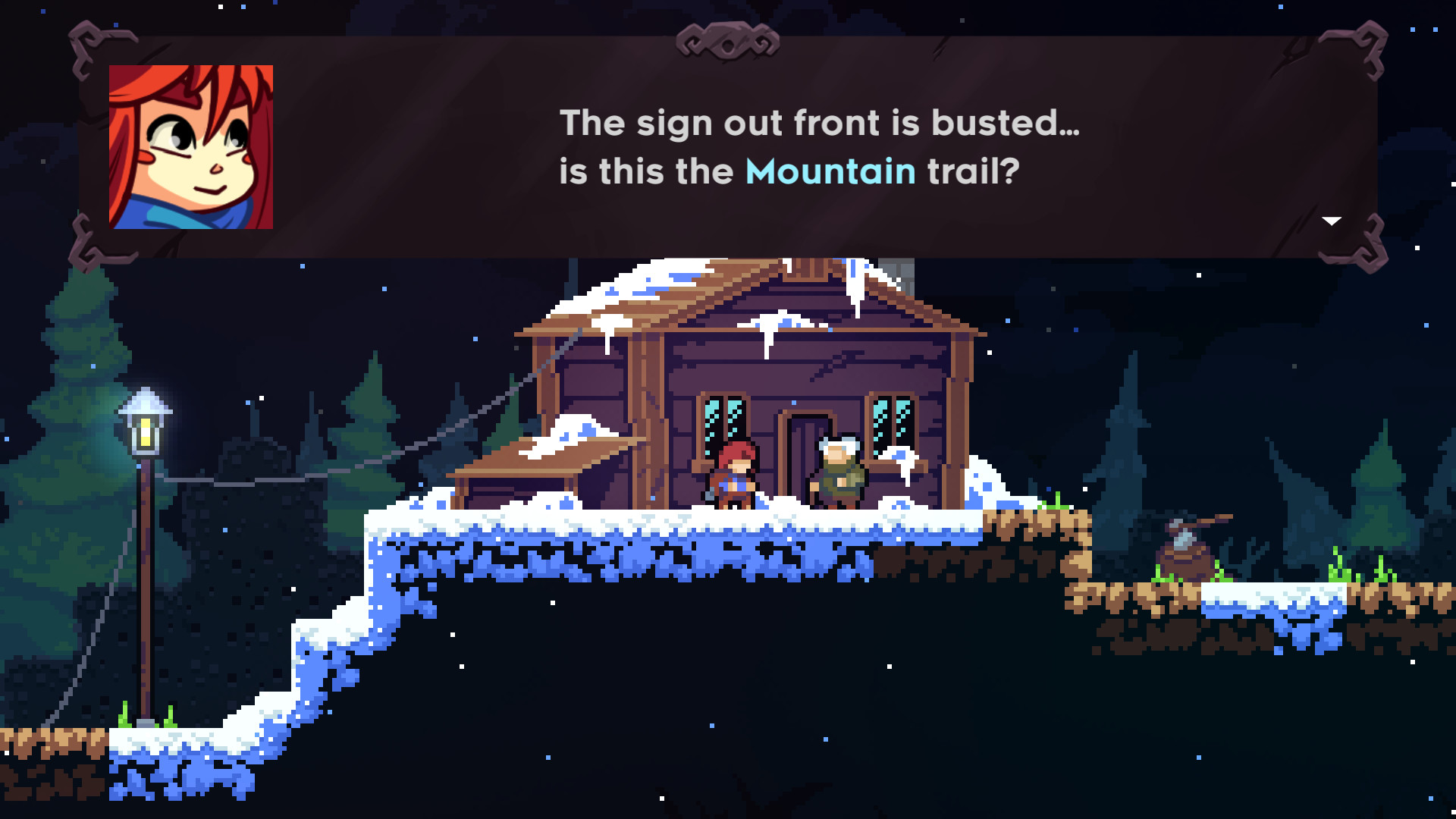
Maddy Thorson and Noel Berry built the original Celeste in three days for the PICO-8, a fantasy console with severe technical limitations. The constraints forced a radical simplicity: move, climb, jump, dash. That is the entire moveset. No upgrades. No skill trees. No equipment. Just four verbs, executed perfectly.
When the team expanded the prototype into the full game released in January 2018, they kept that core philosophy intact. Every chapter introduces a single new mechanic (wind, dream blocks, moving platforms), explores it thoroughly, and then moves on. The game never asks you to manage an inventory or choose a build. It asks you to master four buttons.
Celeste won the Game Award for Best Independent Game and the BAFTA for Best Games Beyond Entertainment. It started as a three-day jam project. If Thorson had tried to make a Metroidvania with RPG elements and a hub world, it would still be in development.
Vampire Survivors: One Mechanic, Default Assets, A Global Phenomenon
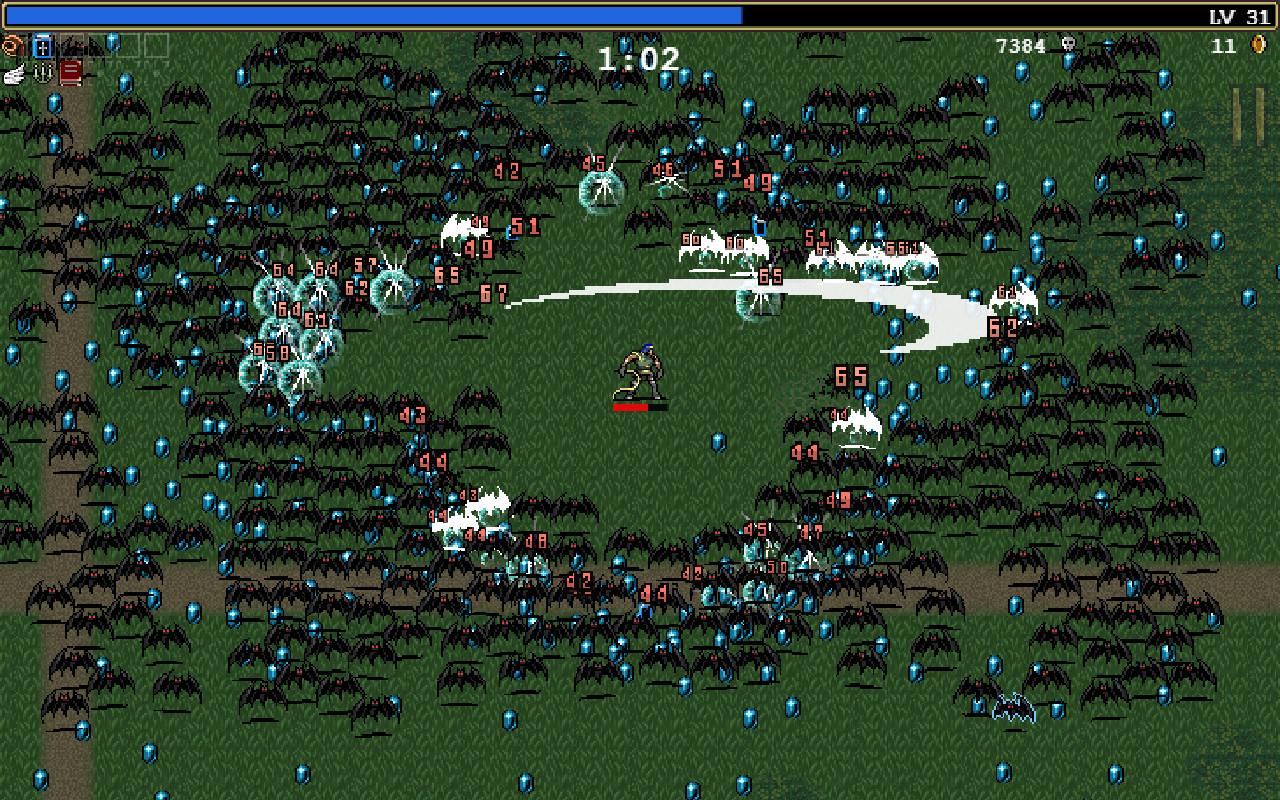
Luca Galante built Vampire Survivors while unemployed, using the HTML5 engine Phaser and default engine assets. His initial goal was to get 100 people to play it on itch.io. The game has one core mechanic: you move, and your character attacks automatically. That is it.
By late January 2022, Vampire Survivors had over 30,000 concurrent players on Steam. By the following month, it surpassed 70,000. The game won the BAFTA for Best Game in 2023 and spawned an entire subgenre. The Sunday Times estimated Galante’s accumulated wealth at £40 million by August 2024.
The lesson is brutal in its clarity. Galante did not need polished art, complex systems, or years of development. He needed one satisfying loop, executed well, and shipped fast.
Undertale: One Developer, 32 Months, Zero Bloat
Toby Fox developed Undertale almost entirely by himself over 32 months, from December 2012 to September 2015. Temmie Chang contributed character art and designs, but Fox handled all code, writing, and music solo. He funded development through a Kickstarter that raised $51,124 against a $5,000 goal.
Undertale is a turn-based RPG where you can choose to fight or spare every enemy. That single idea drives the entire game. There is no crafting system, no skill tree, no open world exploration. The game takes six to eight hours to complete. It has sold millions of copies and holds a 92 on Metacritic.
Fox could have added a party system, side quests, crafting, multiplayer. He chose not to. He shipped a tight, focused experience that players remember years later.
The Warning: When Scope Creep Gets “Controlled”
Not every scope expansion ends in disaster. But the success stories come with asterisks.
Stardew Valley took Eric Barone (ConcernedApe) four and a half years of solo development, working an average of ten hours a day, seven days a week. His scope grew far beyond the original plan. He started building what he expected to release on Xbox Live Indie Games and ended up creating one of the most beloved farming sims ever made. But Barone refused to launch until the game was feature complete, turning down Early Access and pre-sale revenue. Most solo devs cannot afford that gamble.
Hollow Knight is another case. Team Cherry’s “controlled scope creep” produced a critically acclaimed metroidvania in 2017. But the same approach nearly sank its sequel. Silksong started as DLC for Hollow Knight and expanded into a full game announced in February 2019. As of early 2026, it has been in development for over seven years. Co-founder Ari Gibson told Bloomberg that he had to force himself to stop sketching new ideas because “everything I’m drawing here has to end up in the game.” Co-founder William Pellen admitted: “There was a period of two to three years when I thought it was going to come out within a year.”
Stardew Valley and Hollow Knight shipped because the developers had exceptional discipline and stamina. They are the exception, not the rule. For every ConcernedApe, there are hundreds of developers who expanded their scope and never recovered.
A Practical Framework for Scoping Your Game
Here is a concrete process you can use right now.
1. The One Sentence Test
Describe your game in one sentence. Not one paragraph. One sentence. If you cannot, your scope is too big.
- “A platformer where you climb a mountain using four moves.” (Celeste)
- “An auto-battler where you move through waves of monsters.” (Vampire Survivors)
- “An RPG where you can spare every enemy.” (Undertale)
If your sentence has the word “and” more than once, you are building two games. Pick one.
2. Define Your Minimum Viable Game
What is the smallest version of your game that a stranger would play for ten minutes and say “that was fun”? Write it down. That is your launch target. Everything else is a “nice to have” that goes on the cut list.
Your minimum viable game is not your dream game. It is the seed of your dream game. Ship the seed. Grow it after launch with updates if it finds an audience.
3. The Cut List
Create a document called “cut list” or “sequel features.” Every time you have a cool idea that is not in your minimum viable game, write it there instead of implementing it. This is not a rejection of the idea. It is a deferral. You are not saying “no.” You are saying “not yet.”
The cut list serves two purposes. First, it lets you capture ideas without acting on them, which satisfies the creative itch without derailing your project. Second, it becomes your post-launch roadmap if the game succeeds.
4. Time-Box Everything
Give every feature a time budget before you start building it. If the inventory system should take one week and it is day five with no end in sight, you have two choices: simplify it or cut it. There is no third option. “I’ll just finish it this weekend” is how scope creep wins.
5. Playtest Your Core Loop First
Before you build the world around your game, make sure the core loop is fun. Build the smallest possible version of your main mechanic. Put it in front of someone. If they do not enjoy the core loop on its own, more features will not save it. Check our game feel guide for techniques that make a simple mechanic feel satisfying.
Game Jams Are Scope Training
If you struggle with scope, game jams are the best training ground available. A 48-hour jam forces you to make a complete game with a beginning, middle, and end. You cannot scope creep in 48 hours. You can only ship or fail.
The constraints are the point. Limited time teaches you to identify the one idea that matters and cut everything else. Celeste started as a game jam project. So did Superhot. So did Downwell. If you have never participated in a jam, read our game jam survival guide and try one this month.
When to Say “That Is a Sequel”
The hardest skill in game development is knowing when your game is done. Here is a rule that helps: if a feature does not directly support your one-sentence description, it belongs in the sequel, a DLC, or a post-launch update.
Vampire Survivors launched at $3 with a fraction of the content it has today. Stardew Valley received massive free updates for years after launch. Hollow Knight added four free content packs after release. These games shipped first and expanded later. They did not try to ship the expanded version on day one.
Your game does not need to be everything. It needs to be something. Ship that something.
The Bottom Line
The games industry does not reward ambition. It rewards execution. A small, polished, finished game will always beat a large, rough, abandoned project. Every hour you spend on a feature outside your core vision is an hour stolen from shipping.
If you are just starting out and wondering where to even begin, check our guide to coding your first game. And when your game is ready to ship, our indie game marketing guide covers everything from Steam page optimization to building an audience.
Define your scope. Write your cut list. Ship your game. You can always make it bigger later. You cannot make it real if you never finish it.
Written by
Stive Godin
Web dev by profession, gamer by passion. Always chasing the next great game and the next personal best in the gym. Building websites, playing games, and lifting heavy things.